Quote vs estimate vs invoice: what’s the difference?
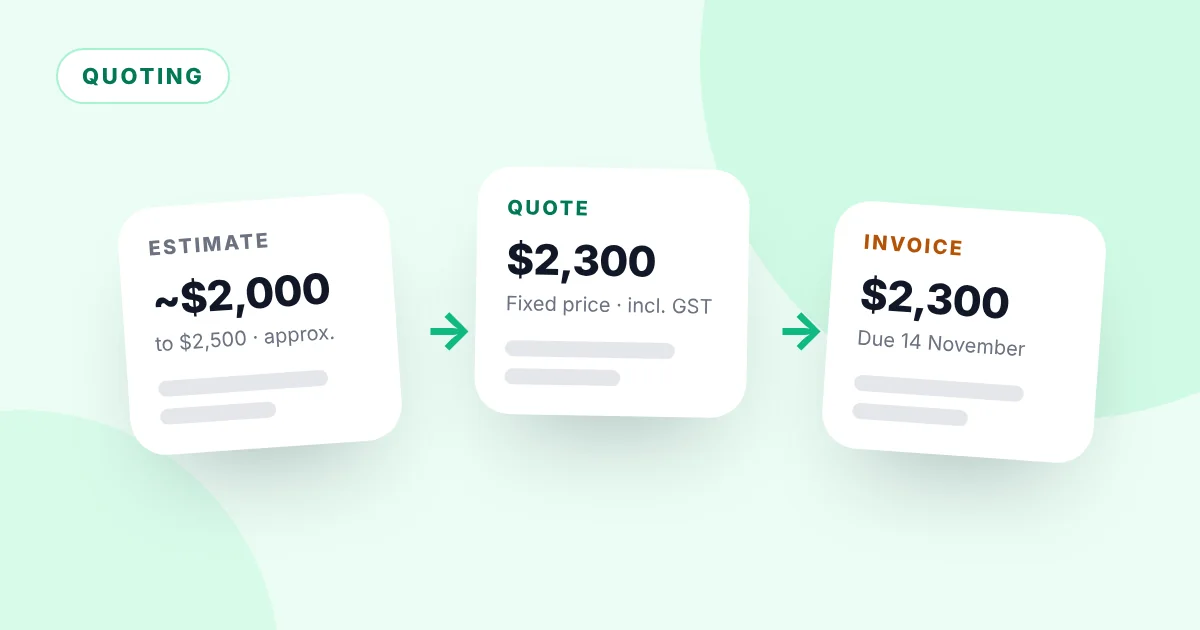
A quote is a fixed price for a clearly defined job. An estimate is your best guess when the full cost isn’t known yet. An invoice is the bill you send to get paid once the work (or a stage of it) is done. Quotes and estimates come before the work; invoices come after.
Key takeaways
- Quote = fixed price. Estimate = approximate price. Invoice = request for payment.
- An accepted quote can form part of a contract — you can’t usually change the price without agreement.
- Use an estimate when the scope is genuinely uncertain, and update the client if costs rise.
- Turn accepted quotes into invoices so the numbers always match.
The difference at a glance
| Estimate | Quote | Invoice | |
|---|---|---|---|
| When | Before the work | Before the work | After the work (or at stages) |
| Price | Approximate | Fixed | Final amount owed |
| Purpose | Give a ballpark | Agree a price | Request payment |
| Binding? | Not a fixed price | Can form part of a contract once accepted | Records what’s owed |
| Example | “About $2,000–$2,500” | “$2,300 incl. GST, valid 30 days” | “$2,300 due 14 November” |
What is a quote?
A quote (or quotation) is a fixed price for a specific job. According to the NT Government’s guide to quotes and estimates, a quote is a fixed price that includes parts and labour, and it becomes legally binding when it forms part of a contract — that is, once the client accepts it.
That’s why a good quote spells out exactly what’s included and what isn’t. Here’s how to write a quote that wins the job, with a free template.
What is an estimate?
An estimate is an educated guess at the cost, used when you can’t know everything upfront — like a repair where you won’t see the problem until you open things up. The final price can be higher or lower.
Estimates still need to be honest and reasonable. Good practice:
- Give a range (“$2,000–$2,500”) and explain what could change it.
- Agree a spending limit, and check in before you go over it.
- Convert it to a fixed quote once you know the full scope.
What is an invoice?
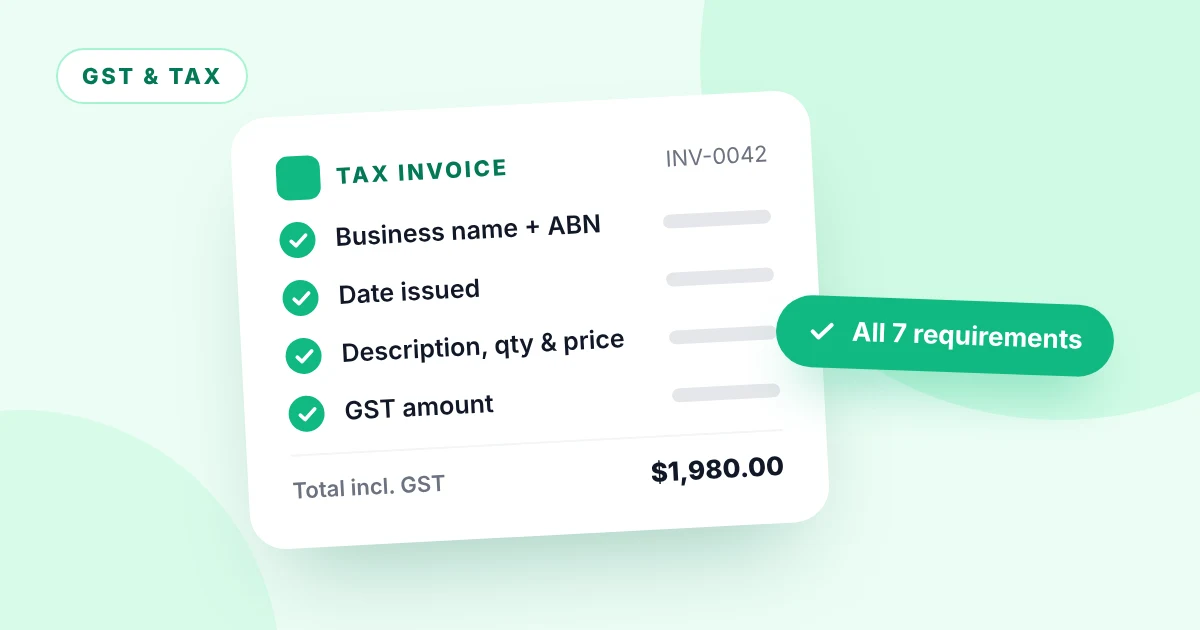
An invoice is a request for payment. It lists what you supplied, what’s owed and when it’s due. If you’re registered for GST, sales over $82.50 need a tax invoice that meets the ATO’s requirements.
Ideally your invoice mirrors the accepted quote, line for line, and references the quote number. Grab one of our free invoice templates to get started.
Which one should you send?
- Send a quote when you can define the job clearly — most freelance projects, installs, cleans, design packages and fixed-scope work.
- Send an estimate when the scope is genuinely uncertain — repairs, renovations with unknowns, or early budgeting conversations.
- Send an invoice when the work (or an agreed stage) is done, or to collect an agreed deposit.
When the price changes
The client wants extra work: agree it in writing first — a quick “variation” email with the extra cost — then add it to the invoice as a separate line.
Your costs went up after the quote was accepted: you generally need the client’s agreement to change an accepted price. That’s why quotes should have an expiry date, and why longer jobs may need a price-adjustment clause agreed upfront.
An estimate is running over: tell the client as soon as you know, explain why, and get their go-ahead before continuing.
And once the invoice is out, set clear payment terms so you’re not left chasing payment.
Frequently asked questions
What is the difference between a quote and an estimate?
A quote is a fixed price for a defined job. An estimate is an approximate price, used when you can't know the full cost upfront, so the final amount may be different.
Is an estimate legally binding?
An estimate isn't a fixed price, so the final amount can differ. But it should be a genuine, reasonable estimate — if the cost is likely to go well over it, tell the client before doing the extra work.
Can I charge more than my quote?
Generally not for the same work, once the client has accepted the quote. If the client asks for extra work or the scope changes, agree a variation in writing before you do it.
Is a quote the same as an invoice?
No. A quote is sent before the work to agree the price. An invoice is sent after (or at agreed stages) to request payment. Many businesses convert an accepted quote into an invoice.
What is a pro forma invoice?
A pro forma invoice is a preliminary bill that shows what a final invoice will look like — often used for deposits or international shipping. It isn't a request for payment in the same way as a tax invoice.
This article is general information only, not tax, legal or financial advice. Rules change — check the linked ATO and business.gov.au pages or speak to a registered tax agent about your situation.