How to ask for a deposit (and how much to charge)
For most freelancers and service businesses, a deposit of 20–50% of the job is common — higher when you have big upfront costs or custom work, lower for small or repeat jobs. Put the deposit in your quote, send a deposit invoice when the client accepts, and don’t start until it’s paid. Some industries, like residential building, have legal caps on deposits.
A deposit protects your cash flow, covers materials, and filters out clients who aren’t serious. Done well, it also reassures good clients that you’re a real, organised business.
Key takeaways
- 20–50% is a common deposit range for freelance and service work.
- Include the deposit in your quote and terms from day one.
- Send a proper deposit invoice and wait for payment before starting.
- Write down cancellation and refund terms before the client pays.
- Building work has legal deposit caps — e.g. 10% in NSW.
How much deposit to ask for
There’s no one right number. These are common starting points — adjust for your business:
| Type of work | Common deposit | Why |
|---|---|---|
| Small jobs, repeat clients | None to 20% | Low risk, trusted relationship |
| Freelance projects (design, web, content) | 30–50% | Time booked out, custom work |
| Custom-made products | 50% or more | Materials bought upfront, hard to resell |
| Bookings (events, photography) | 20–50% | Secures the date, you turn other work away |
| Residential building work | Capped by law | See the rules below |
For bigger projects, combine a deposit with milestone payments — for example 30% upfront, 40% at a midpoint, 30% on completion — so you’re never too far out of pocket. Our guide to payment terms covers these options.
Rules for building work
If you do residential building work, deposits are regulated by your state. For example:
- NSW: you can’t ask for a deposit of more than 10%, and residential building work over $5,000 needs a written contract — see NSW Government’s guide to home building contracts.
- Victoria: deposits are currently capped at 10% for domestic building contracts under $20,000 and 5% for contracts of $20,000 or more — see Consumer Affairs Victoria. Victorian building contract reforms are due to start by 1 December 2026 and may change these limits, so check before you quote.
Other states have their own rules. Check with your state’s building or fair trading regulator before you set a deposit.
How to ask for a deposit (wording)
The best time to mention a deposit is in the quote, not after the client says yes. Then confirm it when they accept:
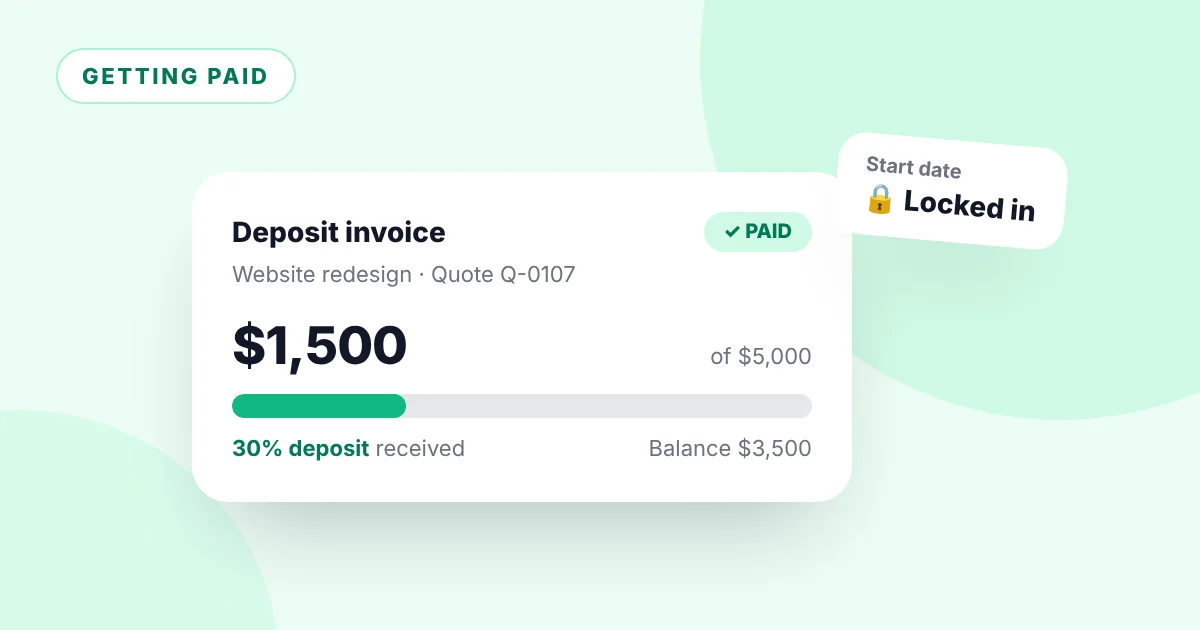
Payment terms: a [30%] deposit of [$1,500] is required to confirm your
booking. The balance of [$3,500] is due within [7] days of completion.
Subject: Let's lock it in — deposit invoice for [project]
Hi [Name],
Great news — thanks for accepting the quote! To lock in your start date
of [date], I've attached the deposit invoice for [$1,500] ([30%]).
Once that's paid I'll get everything booked in and send through next steps.
Thanks,
[Your name]Keep it matter-of-fact. A deposit is a normal part of doing business — no need to apologise for it.
How to invoice a deposit
Send a separate invoice for the deposit. It should show:
- “Deposit” in the description, with the quote number and job name.
- The deposit amount, the total job price and the balance still to come.
- A clear due date (often “due on receipt” or within a few days).
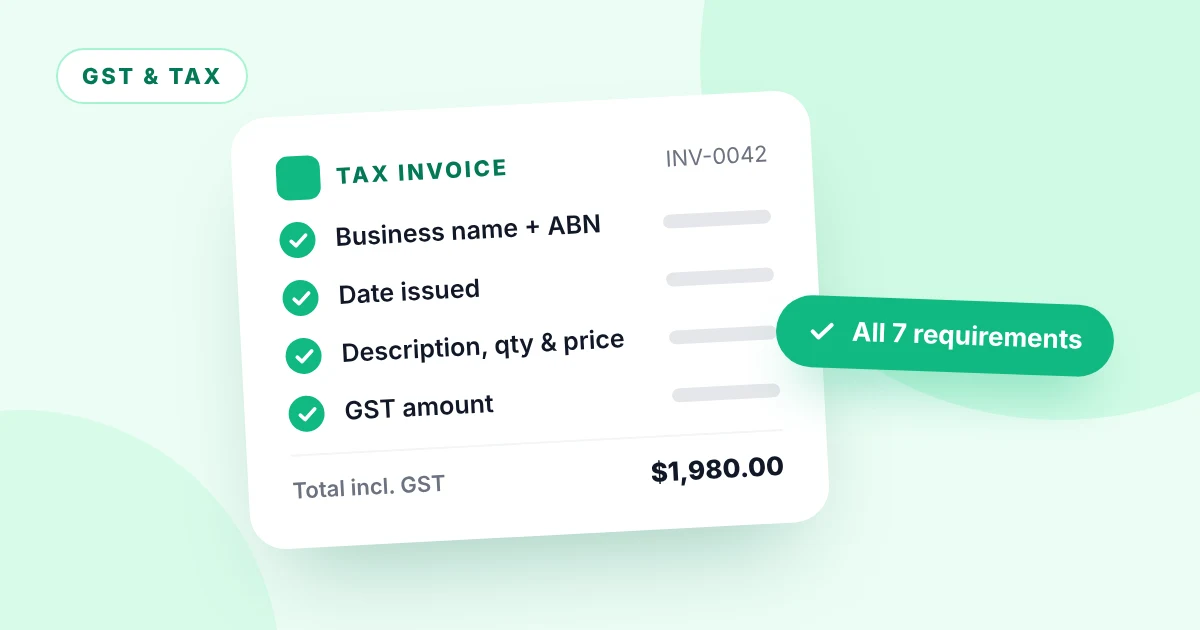
- GST, if you’re registered — and if it’s a tax invoice, everything on our tax invoice checklist.
When the work is done, the final invoice shows the full price, subtracts the deposit already paid, and asks for the balance. Our free invoice templates make this easy.
Cancellations and refunds
Agree in writing — before the client pays — what happens if they cancel. For example, that the deposit covers work already done and costs you’ve already incurred, with any unused amount refunded.
Be careful with one-sided terms. Since 9 November 2023, penalties can apply for using unfair terms in standard form contracts with consumers and small businesses — and terms that penalise only one party for ending a contract are among the examples the ACCC gives. A reasonable deposit tied to your real costs is far easier to defend than a large, non-refundable one. The ACCC’s guide to the unfair contract terms law has the details.
And if a client stops paying altogether, here’s how to chase unpaid invoices — with free reminder email templates.
Frequently asked questions
How much deposit should I ask for?
Many freelancers and service businesses ask for 20–50% upfront, depending on the size of the job and how much you spend before starting. Some industries have legal limits — for example, residential building work in NSW is capped at 10%.
Is it unprofessional to ask for a deposit?
No. Deposits are standard for larger jobs, custom work and bookings. Explain that it secures the client's spot and covers upfront costs, and include it in your quote from the start.
Are deposits refundable?
It depends on what you agreed. Put your cancellation and refund terms in writing before the client pays. Be careful with terms that keep a large deposit no matter what — they can be challenged, including under the unfair contract terms laws.
Do I charge GST on a deposit?
If you're registered for GST and the deposit is a part payment for a taxable sale, GST generally applies. The timing depends on the type of deposit and your accounting method, so check with the ATO or your tax agent.
Should I send an invoice for a deposit?
Yes. Send a deposit invoice that references the quote, shows the deposit amount and due date, and notes the balance that will be invoiced later. It makes payments easy to track.
This article is general information only, not tax, legal or financial advice. Rules change — check the linked ATO and business.gov.au pages or speak to a registered tax agent about your situation.